Industries We Serve
View all industries
Commercial Real Estate
Office parks, retail, mixed-use

Data Centers
Mission-critical connectivity
Hospitality
Hotels, resorts & venues
Residential
MDUs, HOAs & smart homes
Healthcare
Hospitals, clinics & campuses
Education
K-12, universities & districts

Local & State Government
Municipalities & public safety
Industrial & Warehouses
Logistics & manufacturing
Every building has unique signal challenges. We design the right DAS solution for yours.
Talk to a Signal Architect
Case Study

Building Size
669,827 sq ft
Building Type
Manufacturing and Office Facility
Industry
Industrial
Carriers
AT&T, Verizon, T-Mobile
DAS Vendor
SOLiD
Location
Auburn Hills, Michigan
DAS Type
Active DAS
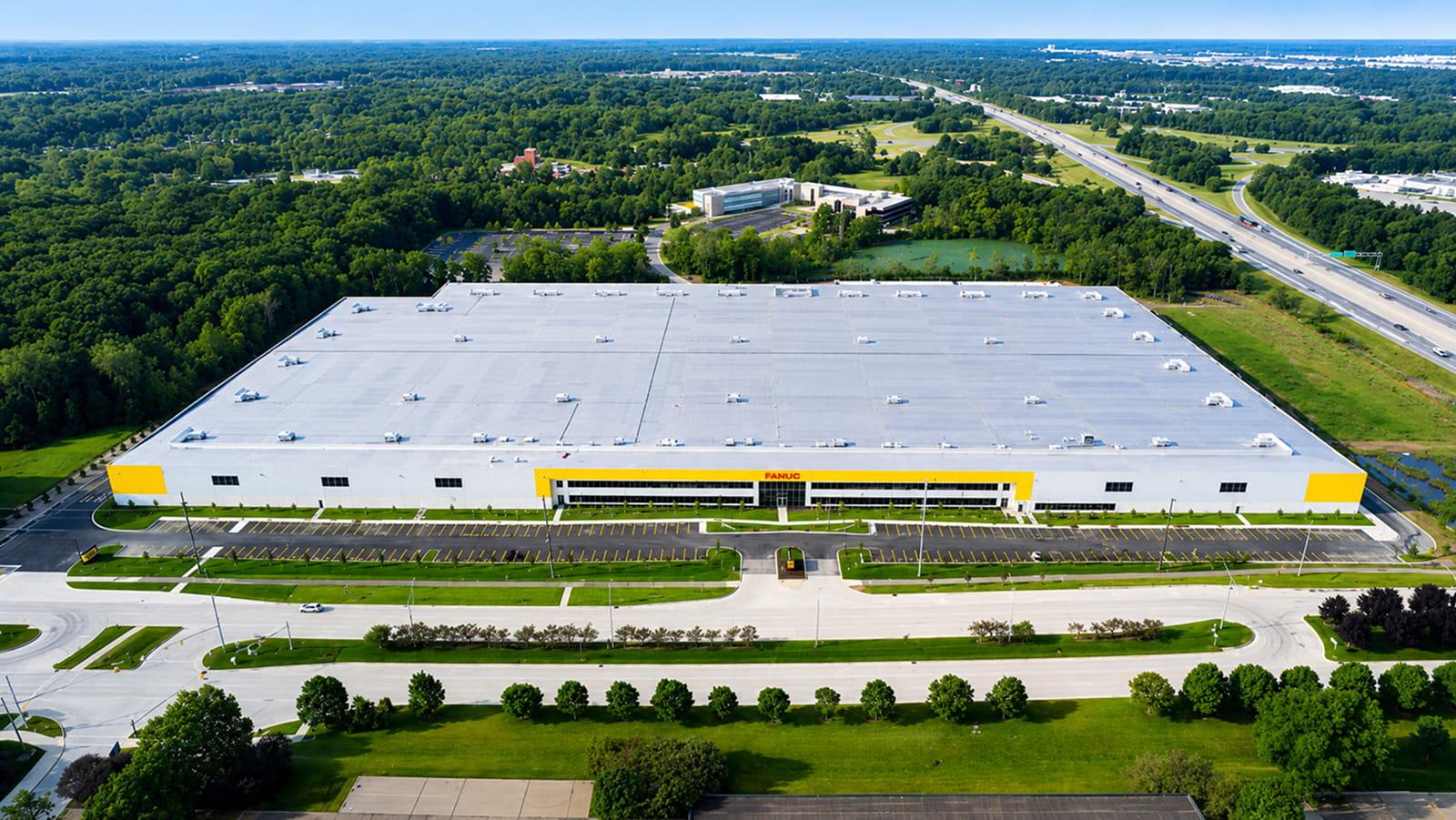
RSRF designed and deployed an off-air active fiber DAS at FANUC's West Campus in Auburn Hills, Michigan, reusing strong rooftop signal to bring all three major carriers inside an automation and manufacturing facility without requiring a direct presence from any carrier.
BUILDING & CLIENT
FANUC's West Campus supports the company's automation and manufacturing operations in Auburn Hills, Michigan.
FANUC is a global leader in factory automation, industrial robotics, and CNC systems. Its West Campus in Auburn Hills is part of a larger multi-building footprint that includes manufacturing space, offices, and demonstration areas where the company's robotic systems are shown to customers. As FANUC expanded the campus, reliable in-building cellular coverage became a priority for keeping staff, visitors, and operations connected across the facility.
PROBLEM
A growing automation campus needed dependable coverage for all three carriers throughout the building.
FANUC needed consistent in-building cellular coverage for AT&T, Verizon, and T-Mobile across its West Campus. The combination of building construction, interior buildout, and the equipment-dense nature of an automation facility made it difficult to rely on the outside macro network for usable indoor signal. FANUC wanted a single partner who could engineer coverage for the full building, source the signal, and deliver a system that would exceed minimum performance thresholds rather than just meet them.
COMPLICATION
This was a working automation facility, and the building itself shaped how the system had to be engineered.
A manufacturing and robotics environment is one of the harder settings for in-building cellular. Racks, robots, automation equipment, and the metal-heavy construction common to these facilities all absorb and reflect signal, and that equipment continues to fill the space as operations scale. Equipment placement was constrained: active amplifiers could only go in designated IDF rooms, which drove the engineering of cable routes and antenna distribution. On the second floor, RSRF divided the area into two halves served by separate remote units to keep coaxial runs short enough to preserve output power and coverage quality. The work also had to fit around an active site, so the deployment was structured to install cabling and antennas first and return for the active electronics, compressing the overall timeline without disrupting the building.
SOLUTION
An off-air active fiber DAS that reused strong rooftop signal for all three carriers.
After a site survey, RSRF found that signal strength on the rooftop was strong enough to be reused for all three carriers. That made an off-air design the right approach: rather than coordinating dedicated carrier equipment, RSRF engineered a standalone system that captures the existing rooftop signal and rebroadcasts it inside the building. This meant the project did not require a direct presence from any carrier.
RSRF deployed an active fiber Distributed Antenna System built on SOLiD ALLIANCE equipment. Rooftop donor antennas connect by coax to the main head-end unit, with off-air bi-directional channelized amplifiers conditioning the signal for AT&T, Verizon, and T-Mobile. From the head end, fiber distributes signal throughout the building to remote units, which convert it back to high-power RF for the in-building antennas. The system was engineered to LTE coverage criteria and designed to exceed the minimum RSRP threshold across the covered area.
OUTCOME
Reliable coverage for all three carriers, delivered without carrier dependency.
RSRF delivered an off-air active fiber DAS covering FANUC's West Campus, bringing dependable AT&T, Verizon, and T-Mobile coverage to an equipment-dense automation facility. Because the system reuses existing rooftop signal, FANUC gained full in-building coverage without waiting on carrier scheduling or a dedicated signal source agreement. The phased installation approach kept the project on a tight timeline while working around an active site. Post-installation, RSRF's Network Operations Center provides ongoing monitoring, maintenance, and support under a multi-year service agreement, with the option to extend that coverage to other FANUC campuses over time.
From our portfolio
Every building is different. See how we've solved similar challenges across different buildings and industries.


Active fiber DAS, 980K sq ft
Warehouse & distribution ctr
AT&T and T-Mobile coverage


Active fiber DAS, 413K sq ft
New manufacturing plant
AT&T, Verizon, T-Mobile


2.3M sq ft across two towers
AT&T, Verizon & T-Mobile
On time, zero change orders