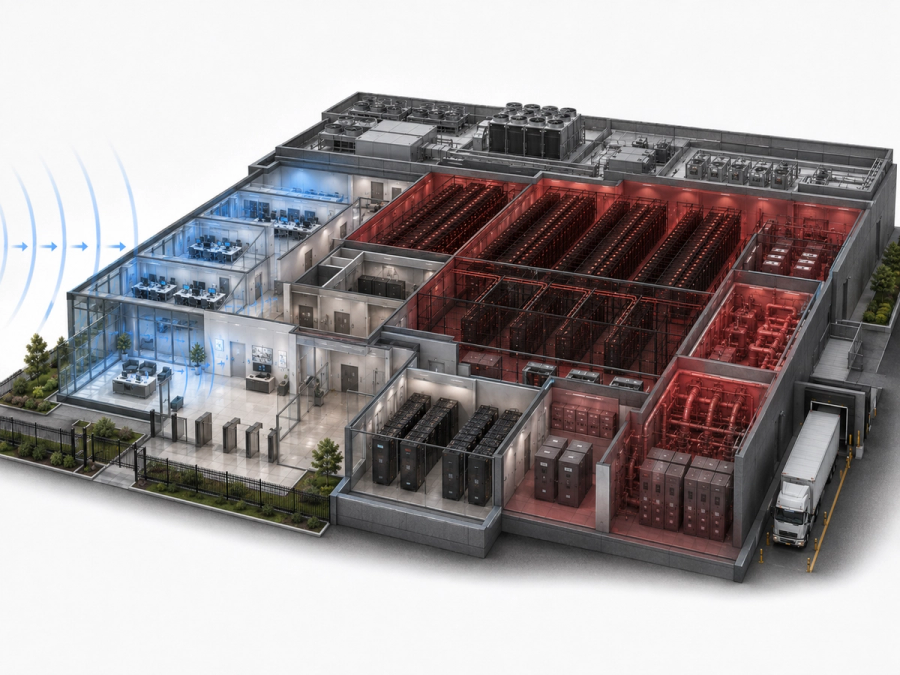
Your staff shouldn't have to walk outside to make a call. We design and install distributed antenna systems for data halls, cage rows and colocation suites.
Coverage for operations, security, and tenant suites
Data centers are built to protect hardware, not to carry signal.
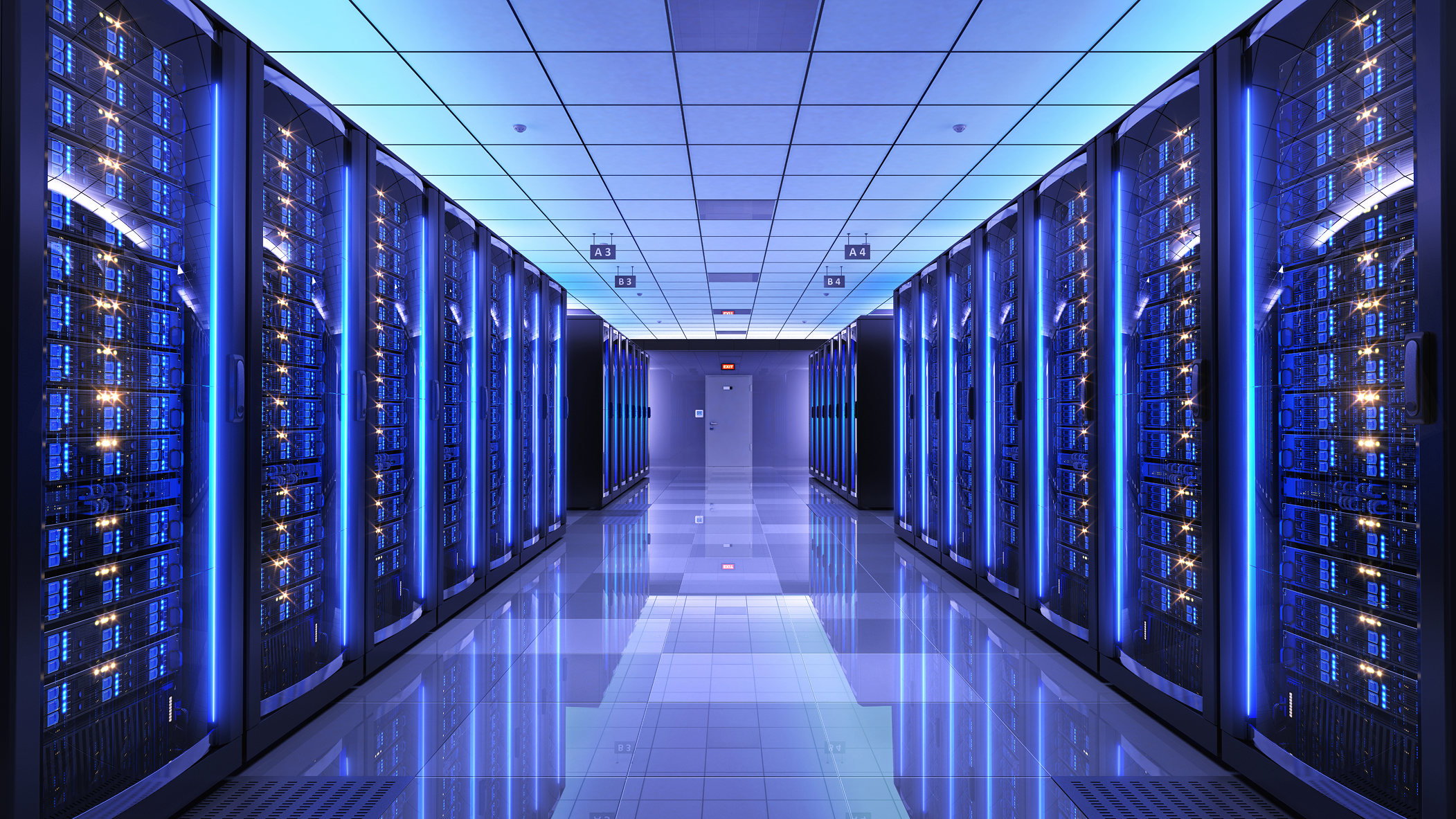
A data center is built to keep the outside world out, and cellular signal is part of the outside world. Concrete and steel stop it at the envelope, and the EMI shielding in your data halls removes whatever is left, in the rooms where operations teams spend their day.
Technicians in cage rows lose contact with their team the moment they step inside. Colocation tenants pay for a carrier-neutral facility and expect coverage to match it. When it does not, your competitors use it against you.
RSRF has deployed DAS in hyperscale data centers, multi-tenant colocation facilities and enterprise data halls running around the clock, installed around live infrastructure without introducing interference. We've done it before.
What we get called in to fix
Shielded data hall dead zones
EMI shielding designed to protect equipment also eliminates all cellular signal inside the hall.
RF noise from infrastructure
Dense server racks, UPS systems, and cooling equipment generate interference that degrades signal quality.
Thick construction walls
Concrete and steel panels prevent outdoor signal from penetrating into interior operations areas.
Large single-floor footprints
Expansive data floor layouts cannot be served by a single access point or passive booster solution.
24/7 uptime constraints
Installation must happen around live production systems without causing downtime or introducing interference.
Multi-tenant colocation coverage
Tenants across different cage and suite configurations all require consistent all-carrier coverage.
Can a DAS system be installed without interfering with sensitive server equipment or EMI-shielded data halls?
Yes. We engineer around EMI-sensitive environments as a standard part of our process. Antenna placement, cable routing, and power levels are all specified to avoid interference with server equipment, shielded enclosures, and critical infrastructure. We have deployed in active data centers and understand the constraints before we ever set foot on the floor.
How do you manage RF noise from UPS systems, cooling infrastructure, and high-density compute?
We conduct a full signal audit during the site visit that accounts for the RF environment specific to your facility. UPS banks, CRAC units, and dense compute generate noise that affects how a DAS performs, and we factor that into the iBwave design model before finalizing antenna placement and signal levels. The system is tuned to perform in that environment rather than assume it away.
Can you install in an active facility without requiring downtime or disrupting operations?
Yes. Data centers are always-on environments and we treat them that way. Our teams coordinate access procedures with your facilities and security teams, work within approved maintenance windows where required, and stage work to avoid any impact to live racks, hot aisles, or raised floor access. No downtime is required for a DAS installation.
Who handles the carrier coordination and signal source approval process?
We do, entirely. That includes submitting applications, navigating each carrier's approval process, and ensuring the installed system meets their technical specifications before sign-off. You don't need a direct relationship with any carrier to get this done.
Can the system support both commercial cellular coverage and a private LTE or CBRS network on the same infrastructure?
Yes. The same DAS infrastructure can carry commercial carrier signals alongside a private LTE or CBRS network simultaneously. This is increasingly common in data centers where technicians and operations staff need reliable connectivity that is separate from tenant-facing cellular coverage. We design for both from the start so you are not building two parallel systems.
What is the typical project timeline for a data center DAS deployment?
Most data center projects run 5 to 12 weeks from site survey to live system. That breaks down as 1 to 3 weeks for system design and the on-site visit, 1 to 3 weeks for the final proposal, and 3 to 6 weeks of installation time once approved. Carrier coordination timelines can affect the overall schedule, which is why we initiate those conversations early.
How do you handle coverage inside shielded cages and individual colocation suites?
Shielded cages and colocation suites block signal the same way exterior walls do, and we account for that in the design. Antenna placement is specified to deliver coverage inside individual suites where needed, including through cage mesh and demising walls. If a tenant requires dedicated coverage within their footprint, we can design for that as part of the overall system or as an add-on scope.
Ready to fix cellular coverage in your building?
Schedule a free 30-minute call with an RSRF DAS specialist. We'll talk through your building, coverage challenges, carrier requirements, and the most practical options for improving service.
Understand which DAS technology fits your building
Get a realistic budget and timeline
Leave with clear next steps—no commitment required
 [email protected]
 (800) 637-4049