Your building wasn't built to deliver them. We design and install distributed antenna systems that give tenants full signal on every floor, on every carrier.
Modern office buildings block cellular signal by design
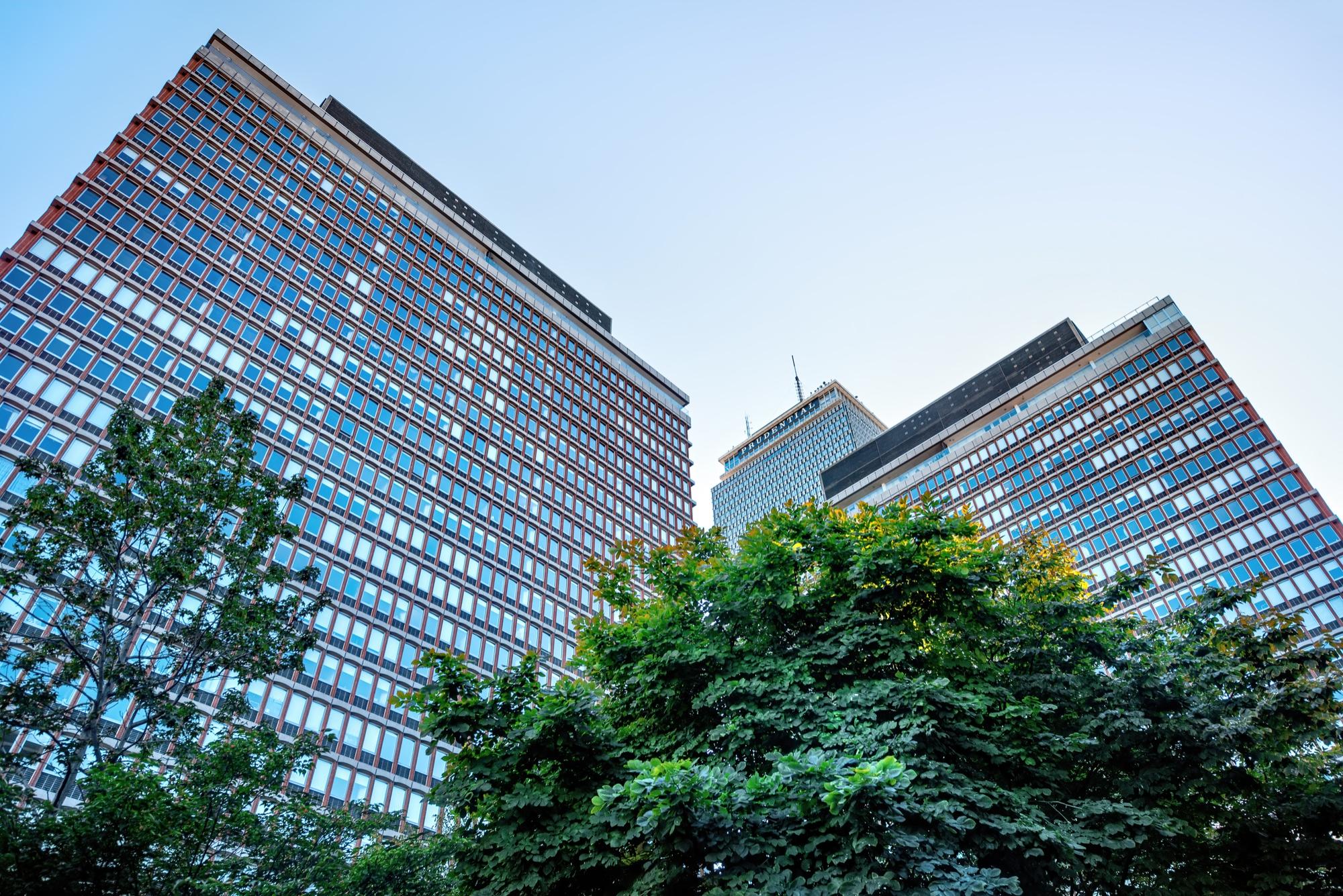
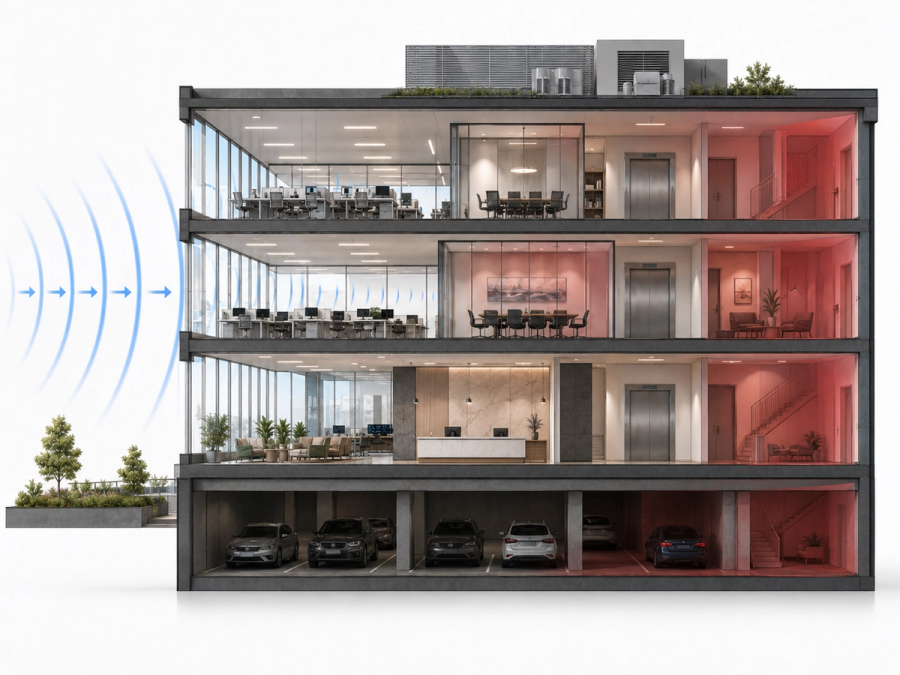
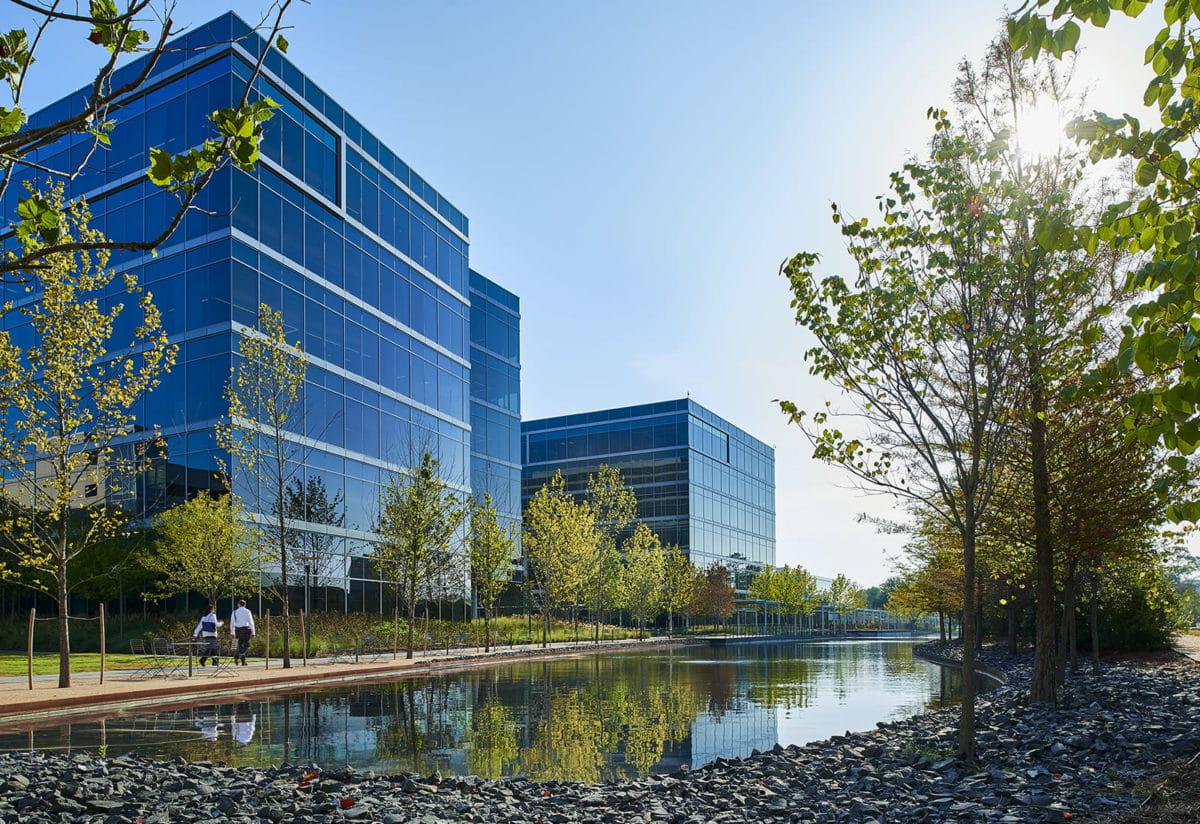
The features that make a building attractive to tenants are the ones that block cellular signal. Low-E glass reflects radio frequencies the same way it reflects heat, and a dense concrete core absorbs whatever gets through before it reaches interior suites.
That is a leasing problem now. Tenants negotiate cellular coverage into their requirements, and in a competitive market, a weak signal puts renewals at risk. It has to work for every carrier, because no landlord can afford to tell a prospective tenant that their network does not work in the building.
RSRF has deployed DAS in Class A office towers, mixed-use retail and residential developments, corporate campuses, and historic buildings with difficult masonry. We've done it before.
What we typically find
Low-E glass blocking
Energy-efficient window coatings reflect cellular signals before they can enter the building envelope.
Interior conference room dead zones
Windowless meeting rooms and interior suites have no path to the outdoor macro network.
Multi-carrier tenant requirements
Tenants on different carriers all expect full, consistent coverage throughout the building.
Basement and parking structure gaps
Below-grade levels have no line of sight to outdoor towers and no usable signal.
Elevator and stairwell coverage
Vertical circulation areas are routinely missed or underserved by standard system designs.
Tenant documentation requirements
Landlords need verifiable coverage testing data to satisfy lease obligations and broker inquiries.
Questions we hear from commercial real estate teams
Can you support AT&T, Verizon, and T-Mobile on the same DAS system?
Yes. A single DAS infrastructure can carry all three major carriers simultaneously, so tenants stay connected regardless of which network they're on. We handle carrier coordination with each provider independently and engineer the system to meet every carrier's technical requirements under one roof.
How does installation work in an occupied building with active tenants?
We do it all the time. Our teams work in live, occupied environments with phased floor-by-floor scheduling, off-hours work where required, and tight coordination with property management to avoid disrupting tenants. We run cable above ceiling tiles, keep common areas clean, and replace any displaced fire caulking or damaged ceiling panels as part of our standard scope.
Who handles the carrier coordination and signal source approval process?
We do, entirely. That includes submitting applications, navigating each carrier's approval process, and ensuring the installed system meets their technical specifications before sign-off. You don't need a direct relationship with any carrier to get this done.
What does a DAS system typically cost for a commercial office building?
Between roughly $0.58 and $1.30 per square foot, depending on building size, construction type and the technology path. The lower figure is typical of a hybrid DAS, the upper figure of an active DAS with carrier-grade signal sources. Our budgetary estimates are usually accurate to within 10% of final pricing.
How long does a commercial real estate DAS project take from site survey to completion?
Most commercial office projects run 5 to 12 weeks. That breaks down as 1 to 3 weeks for system design and the on-site visit, 1 to 3 weeks for the final proposal, and 3 to 6 weeks of installation time once approved.
Can the system be expanded if we add floors, acquire adjacent space, or bring on a new carrier?
Yes, and we plan for that upfront. Adding coverage to new floors, adjacent suites, or an additional carrier typically means extending the existing cable plant rather than starting from scratch, which is significantly more cost-effective.
Do you provide coverage documentation we can share with tenants or listing brokers?
Every project includes a signal audit report with before-and-after coverage maps. We use grid testing to record signal strength floor by floor, so the maps show measured results rather than a prediction. If cellular coverage is part of your leasing story, that gives you something tangible to back it up.
What is a distributed antenna system, and why would an office building need one?
A distributed antenna system takes one cellular signal source and distributes it through the building over cable to antennas placed floor by floor. Office buildings need one because the things that make a building perform — low-e glass, concrete cores, metal decking, below-grade parking — also block cellular signal. When tenants step outside to finish a call, that reads as a building problem, not a carrier problem.
Does the system use the signal outside the building, or a feed from the carrier?
Either, and the choice moves both cost and schedule. An off-air system puts a donor antenna on the roof and re-uses the carrier signal already outside your building — faster and less expensive, but it depends on how strong and clean that outside signal is. A carrier-fed system uses equipment the carrier provides in your headend, which gives dedicated capacity but adds carrier lead time. We measure rooftop signal during the site visit and tell you which path your building can actually support. Carrier approval is required either way.
Our floors are dense. Is coverage the same as capacity?
No. Coverage is whether a phone has usable signal. Capacity is how many phones can use it at once. A full-floor tenant with a few hundred people can show full bars at 9 a.m. and still crawl. Antenna placement solves coverage; the signal source solves capacity, which is why dense floors typically point toward a carrier-fed design — an off-air system shares whatever capacity the nearest macro site has left. Give us headcount per floor and we design to it.
Who looks after the system once it is live?
We commission the system, document it, and hand over the as-builts. After that you decide how much of the ongoing work stays with us — options range from remote monitoring and a periodic performance check to a response-time agreement where you call us and we deal with the carrier. If the building also has a public safety system, your local code sets its inspection and testing intervals, and we can carry that scope as well.
Ready to fix cellular coverage in your building?
Schedule a free 30-minute call with an RSRF DAS specialist. We'll talk through your building, coverage challenges, carrier requirements, and the most practical options for improving service.
Understand which DAS technology fits your building
Get a realistic budget and timeline
Leave with clear next steps—no commitment required
 [email protected]
 (800) 637-4049