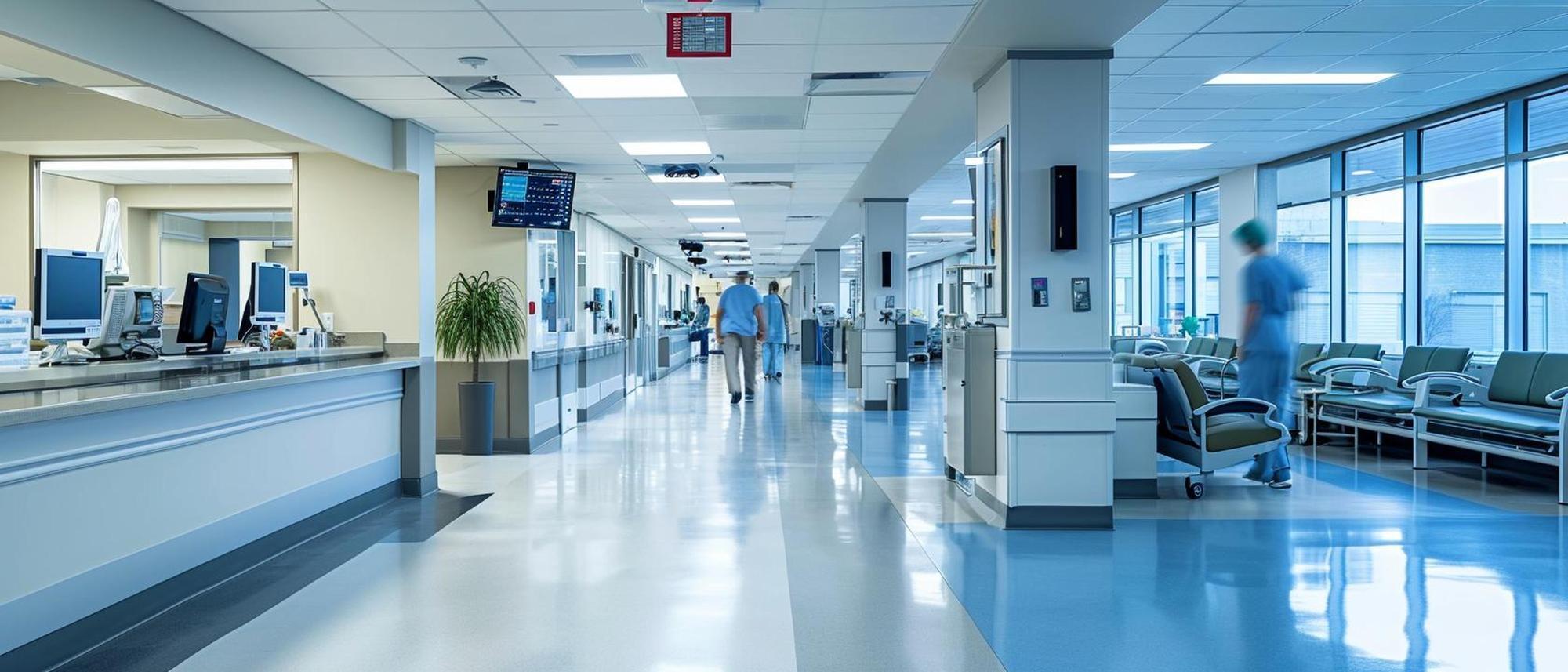
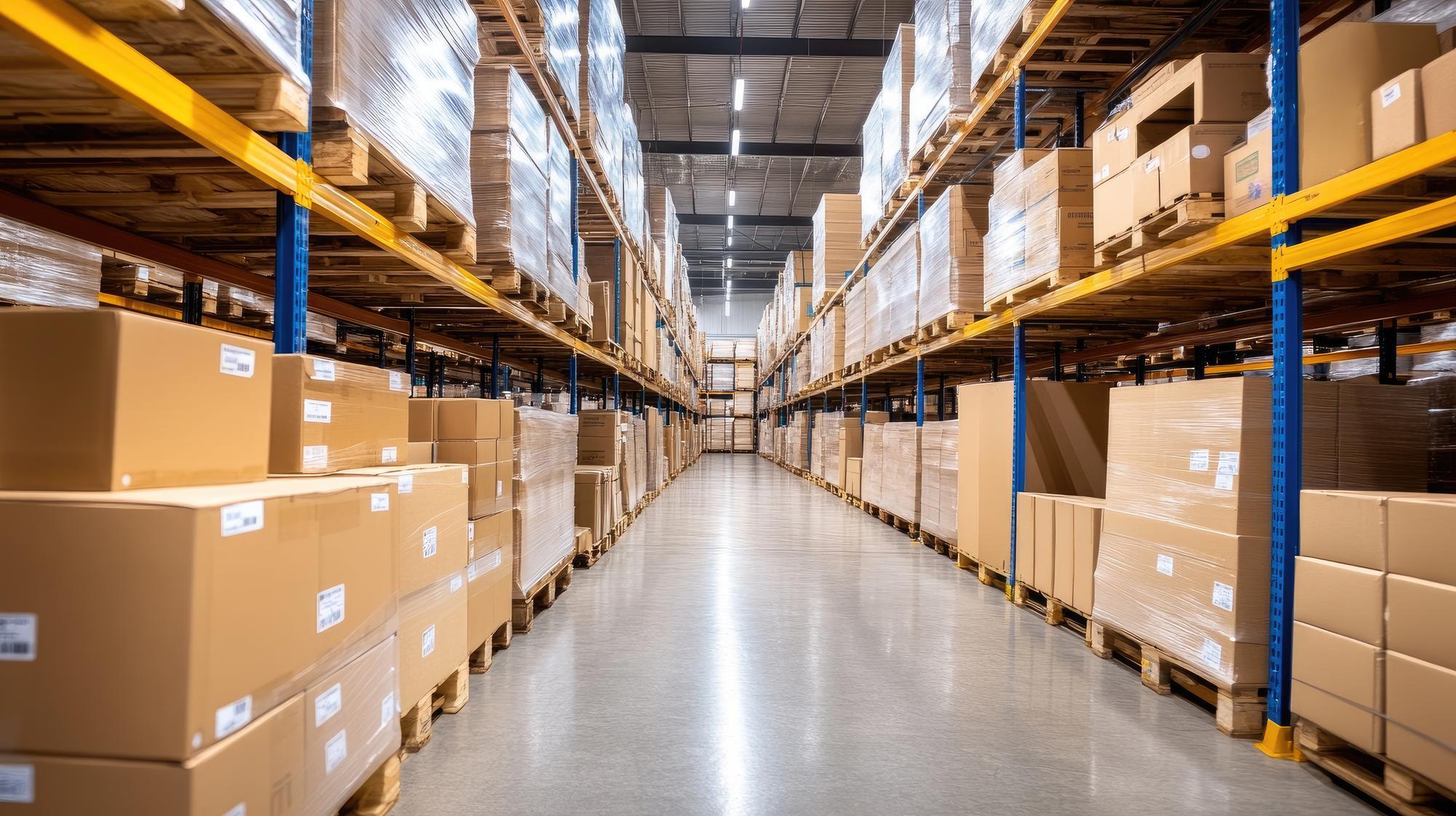
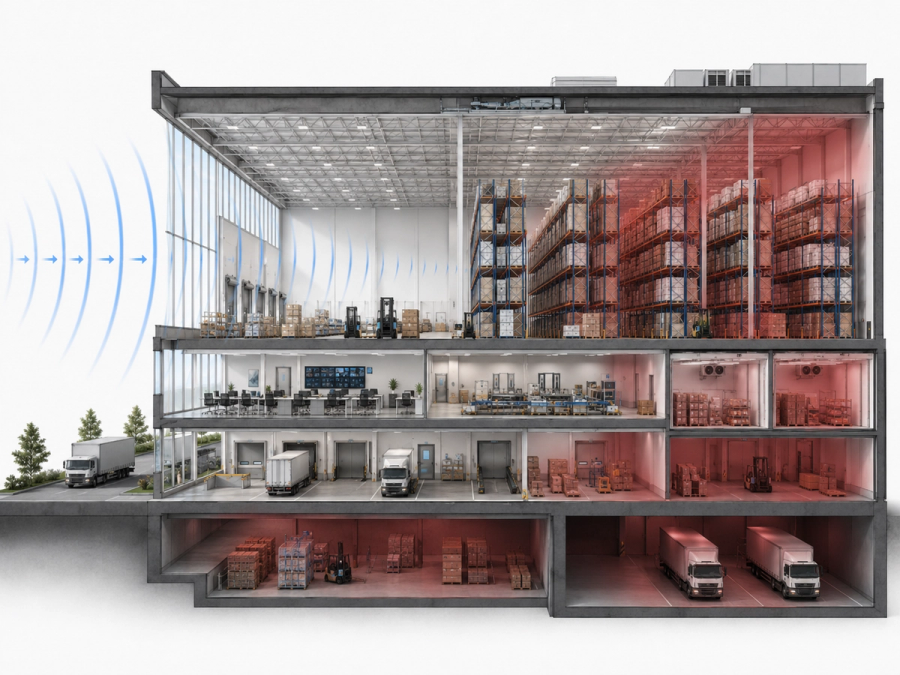
Steel frame and metal panel construction turns the envelope into an RF barrier, and inside it dense racking throws signal shadows at aisle level, which is where the work happens. Perimeter signal never reaches the center of the building.
Your operation runs on devices. Handheld scanners, voice-directed picking and fleet management all depend on continuous connectivity, so when a picker in the middle of the building loses signal, the shift slows down. OSHA and local fire codes increasingly require verifiable radio coverage for safety personnel across the whole footprint.
RSRF has deployed DAS in bulk distribution warehouses, e-commerce fulfillment centers, cold storage facilities and heavy manufacturing plants, carrying commercial cellular and private LTE or CBRS on one system, installed around your shifts. We've done it before.
What we get called in to fix
Metal panel and steel frame construction
Industrial building envelopes reflect and absorb cellular frequencies, blocking the outdoor macro network almost entirely.
Racking and inventory RF shadowing
Dense product storage creates signal dead zones at the aisle floor level where workers and equipment operate.
Large building footprint coverage
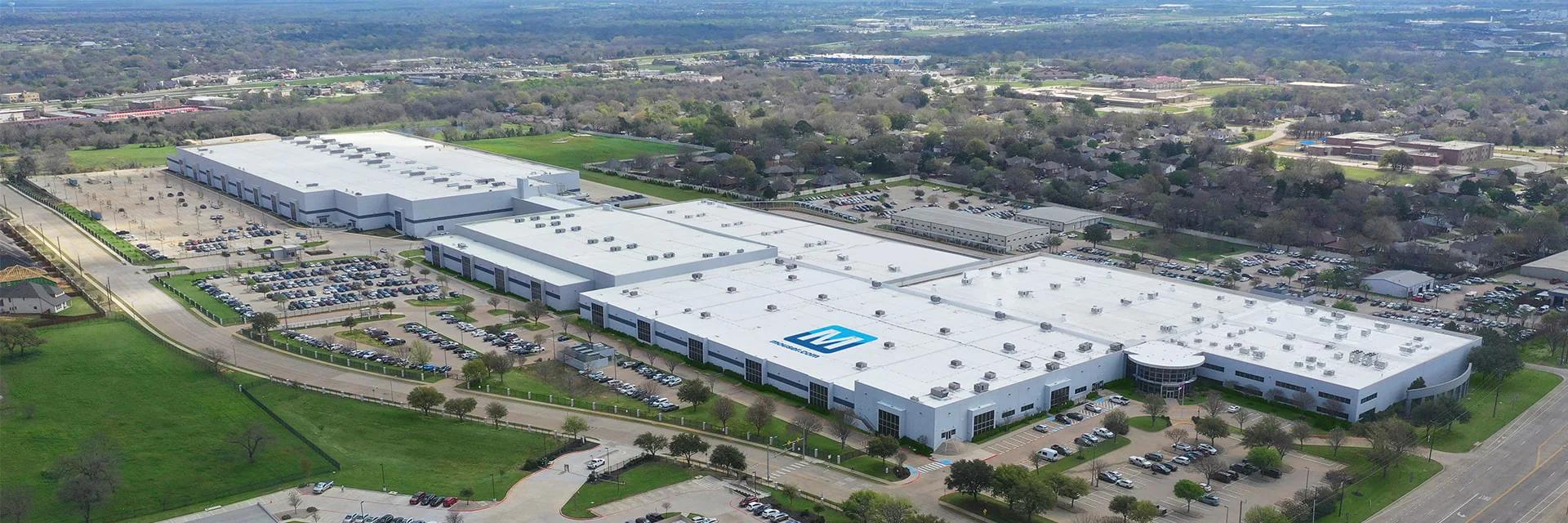
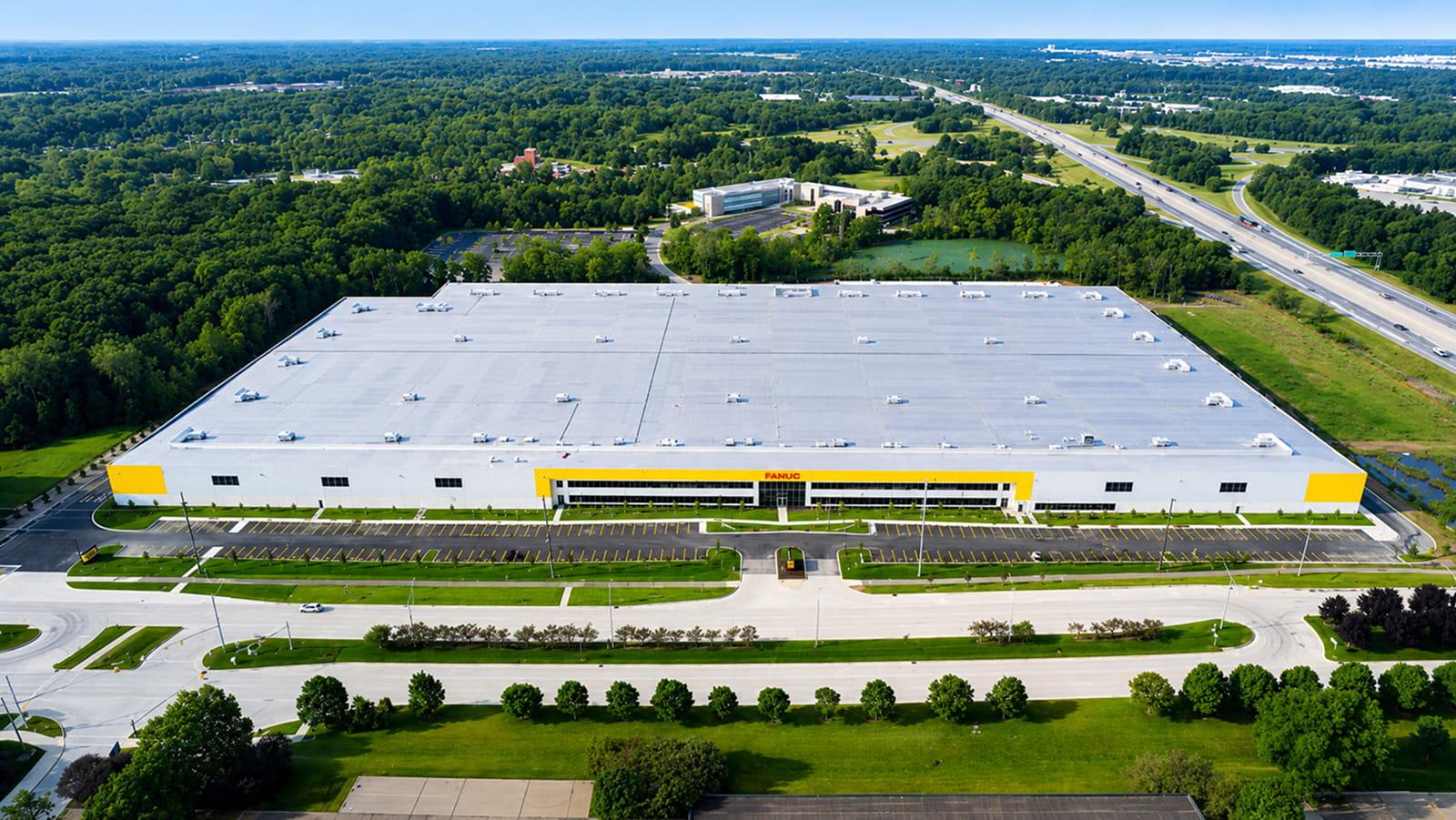
Facilities exceeding 300,000 square feet cannot be served by perimeter signal alone regardless of outdoor signal strength.
Refrigerated and cold storage sections
Insulated metal panel construction in temperature-controlled areas creates additional layers of RF blocking.
Dock and loading area coverage
High-traffic receiving and shipping areas at grade and below grade are typically the most underserved zones in the facility.
Private LTE and CBRS integration
Facilities running IoT, fleet management, or voice-directed workflows need a system that supports private network frequencies alongside commercial carriers.
How do you design coverage for facilities with very large footprints, high racking, and metal construction?
Large industrial facilities present a specific RF challenge. High racking absorbs and reflects signal, metal construction blocks penetration, and square footage alone makes standard antenna placement ineffective. We use iBwave design modeling to simulate how radio waves propagate through your specific environment before any equipment is specified. Antenna type, placement height, and signal levels are all engineered for the actual physical conditions inside your facility, not a generic warehouse template.
Can the system support both commercial cellular carriers and a private LTE or CBRS network on the same infrastructure?
Yes. The same DAS infrastructure can carry commercial carrier signals alongside a private LTE or CBRS network simultaneously. For industrial facilities, private LTE is increasingly used for inventory systems, autonomous equipment, and operational communications that need dedicated bandwidth separate from commercial carrier traffic. We design for both from the start so you are not building two parallel systems across the same floor plate.
How does installation work in an active facility running multiple shifts without disrupting operations?
We work around your shift schedule, not against it. Installation is phased and sequenced so that active areas of the floor remain operational throughout. Work in overhead cable trays, racking infrastructure, and above suspended ceilings is coordinated with your operations and safety teams in advance. No production downtime is required for a DAS installation.
Who handles the carrier coordination and signal source approval process?
We do, entirely. That includes submitting applications, navigating each carrier's approval process, and ensuring the installed system meets their technical specifications before sign-off. You do not need a direct relationship with any carrier to get this done.
What is the typical project timeline for a warehouse or distribution center DAS deployment?
Most industrial projects run 5 to 12 weeks from site survey to a live system. That breaks down as 1 to 3 weeks for system design and the on-site visit, 1 to 3 weeks for the final proposal, and 3 to 6 weeks for deployment once approved. Larger facilities or multi-building campuses may run longer depending on scope and phasing requirements.
Can the system be expanded when we add additional square footage, new wings, or adjacent buildings?
Yes, and we plan for that upfront. Expansion to new sections, additional buildings, or adjacent acquired space typically means extending the existing cable plant and adding remote units rather than rebuilding the core system. We size the head-end and infrastructure with growth in mind so that expansion is straightforward when you need it.
Do your systems meet OSHA and local fire code requirements for first responder radio coverage inside industrial facilities?
Yes. We design and commission systems that meet applicable fire code and public safety radio coverage requirements, including NFPA 72 where required by your local Authority Having Jurisdiction. Every installation is tested and documented to ensure first responder radios operate at required signal levels throughout the facility, including areas that typically fail coverage audits due to metal construction and large open spans.
Ready to fix cellular coverage in your building?
Schedule a free 30-minute call with an RSRF DAS specialist. We'll talk through your building, coverage challenges, carrier requirements, and the most practical options for improving service.
Understand which DAS technology fits your building
Get a realistic budget and timeline
Leave with clear next steps—no commitment required
 [email protected]
 (800) 637-4049