Case Study

Nixon Peabody: Hybrid Off-Air DAS Across Three High-Rise Floors in Downtown Chicago

Nixon Peabody, Three First National Plaza

Building Size

72,208 sq ft

Building Type

Office Building

Industry

Commercial

Carriers

AT&T, Verizon

DAS Vendor

Nextivity (Cel-Fi QUATRA 4000)

Location

Chicago, IL

DAS Type

Hybrid DAS

About the project

Nixon Peabody occupies three floors high in Three First National Plaza, a 57-story tower in downtown Chicago. RSRF designed and installed a hybrid off-air distributed antenna system to deliver reliable AT&T and Verizon coverage across the firm's space, working around an occupied office and a building whose existing in-building system could not be extended to those carriers.

BUILDING & CLIENT

A national law firm on three high-rise floors

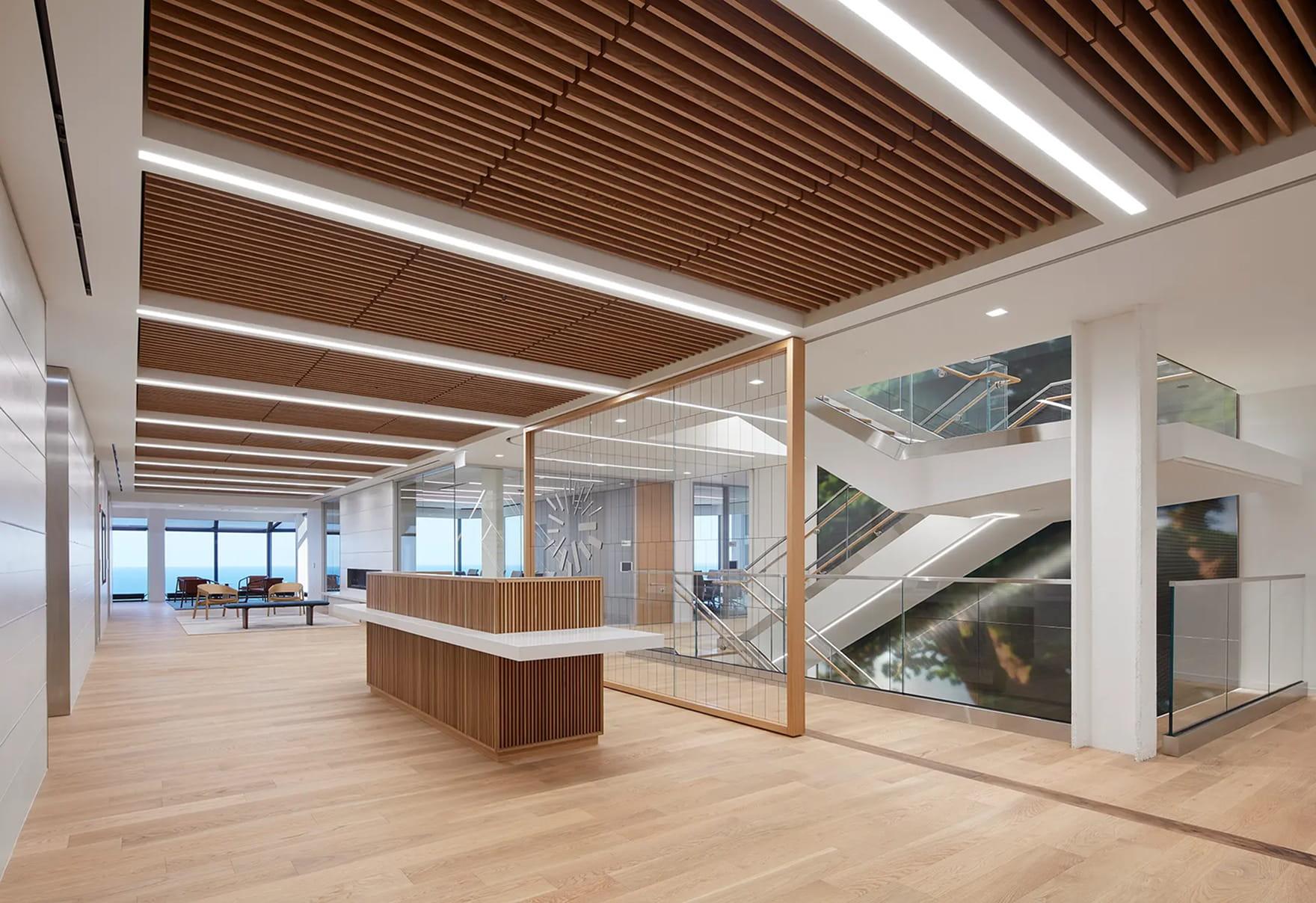
Nixon Peabody leases floors 51 through 53 of Three First National Plaza, a 57-story tower at the center of downtown Chicago, with individual floor plates ranging from roughly 14,000 to 21,000 square feet. The office supports around 180 people in a closed-office layout with dropped ceilings. Like most firms after the shift to mobile-first work, daily business depends on dependable cellular service inside the building, not just at the desk.

PROBLEM

Strong signal outside, unreliable coverage inside

Outdoor signal at the building was strong, but AT&T and Verizon coverage on the firm's floors was poor and inconsistent. The only in-building cellular system already present served a single carrier and could not be extended to AT&T or Verizon, so users on those networks had no reliable indoor service. Consumer-grade boosters the firm had added as a stopgap did not provide adequate coverage across the space, leaving dropped calls and dead zones in a workplace that runs on mobile connectivity.

COMPLICATION

Coverage built into occupied floors, with no system to build on

The work had to be delivered into live tenant floors high in a downtown tower while the firm continued operating, with access limited to business hours and after-hours work scheduled only where needed. Because the building's existing system could not be shared, RSRF had to design a fully self-contained system rather than tap into anything already in place. The closed-office layout and dropped ceilings shaped antenna placement and cable routing, and local code was factored into the cabling approach. Working in RSRF's favor were a strong rooftop donor signal, existing risers running to the roof, and roof access for donor antennas, which made an off-air hybrid design the right fit.

SOLUTION

A hybrid off-air DAS across all three floors

RSRF deployed a Cel-Fi QUATRA 4000 hybrid off-air DAS covering floors 51 through 53. Rooftop donor antennas collect AT&T and Verizon signal, which the Network Unit conditions and digitizes before distributing it over Cat6 ethernet to Coverage Units and ceiling-mounted dome antennas throughout the office. The platform is carrier-grade, FCC-certified, and carrier-approved, and it supports both off-air donor and small-cell signal sources, which gives the firm flexibility as carrier coverage evolves. RSRF handled the full turnkey scope, from design and engineering through installation, testing, and commissioning, with ongoing remote monitoring from the RSRF Network Operations Center.

OUTCOME

Consistent multi-carrier coverage across the office

A post-installation signal audit confirmed significant improvement across all three floors. Areas that previously had no usable AT&T or Verizon signal were brought up to acceptable or strong levels, with coverage now consistent throughout the office apart from a few locations behind thick concrete structural walls. The firm gained dependable AT&T and Verizon service for everyday operations, backed by continuous NOC monitoring and post-installation support.

Discover the most suitable DAS solution for your needs

In particular: are there any concrete or metal walls or other dense obstructions within the building?